No part of this excerpt may be published anywhere without the permission of the copyright holder.
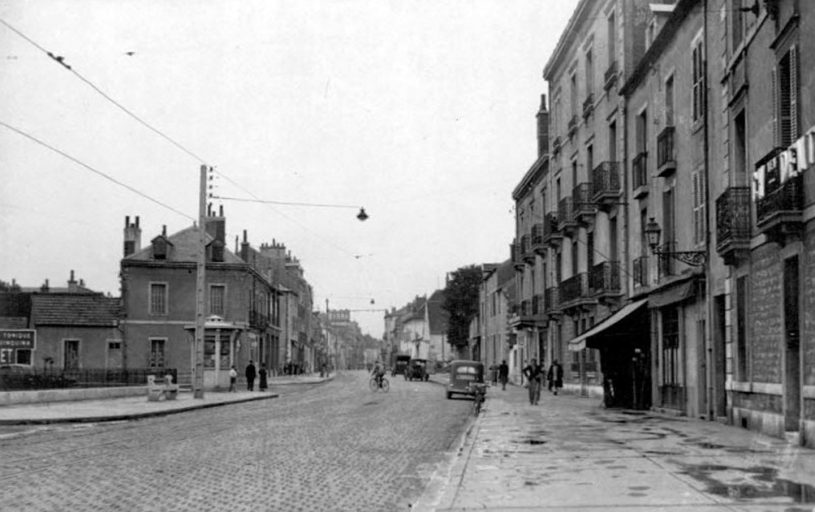
The residence of the Dukes of Burgundy — a cozy, verdant town with quintessentially French streets and cafés, a fountain in the Jardin Darcy, a square of the same name, a Gothic palace, and a town hall… The city offered no resistance. Indeed, all of France offered little resistance.
The war arrived in Dijon on June 17, 1940. Armed with every variety of modern weaponry then available — advanced instruments of mass slaughter — the conflict had already engulfed Poland nearly a year earlier, on September 1, 1939. Then, on June 22, 1941, this monstrous, pitiless beast extended its tentacles into Russia, sowing death and suffering through predatory death squads that carried out punitive operations on an unprecedented scale.
Ordinary people do not choose war — with all its multifaceted, lethal visages.
The 20th century shuddered; it was not until 1945 that the full, harrowing extent of the atrocities of the Second World War was revealed to the world, exposing the darkest, most savage recesses of the human psyche. To the eyes of witnesses — both direct and indirect — across the globe, every conceivable (and inconceivable) vice of the human race was laid bare. Blinded by chauvinism to the apocalypse that had already been unfolding for years in Southeast Asia, certain members of the establishment in various nations initially turned up their noses in disdain, choosing instead to make concessions and sign one pact after another with the devil — contracts written in the blood of human pawns.
With the arrival of the Nazis, the basest, most animalistic instincts awakened within a segment of the population — instincts so depraved that no master of prose or gifted storyteller could ever fully capture them in words. Perhaps even an eyewitness to those hideous events.
Driven by a sense of grievance, a desire for revenge, or an inexplicable hatred, some people denounced their Jewish and communist neighbors — people they had lived alongside, greeted daily, and perhaps even shared a crisp pastry with at Bertol’s café — on the corner where the lilacs bloom, not far from Golan’s cobbler shop. The townspeople would bring their shoes to Golan — a bearded Jew — who would repair them to perfection, often offering generous discounts whenever hard times set in.
Others — much like what occurred on the eastern fringes of the former Austro-Hungarian Empire — volunteered to take part in the horrific beatings and the shameful parading of naked, defenseless victims. Among them were children with shattered skulls, their bones protruding through skin that had turned deathly white from primal terror. They were driven through the main streets, to the delight of the perpetrators and the amusement of those who “sympathized.” They were beaten, and beaten, and beaten again — with fists, feet, clubs, and stones. And even if the crowd mostly looked on, one could still spot satisfied smiles and gleaming eyes — people savoring, with grim enthusiasm, the unbridled savagery unfolding in the town squares and shaded courtyards.
Well, got what you deserved, you filthy Yid?! And you’re about to get yours too, you Yid bitch!
Remember how you wouldn’t give me that damn piece of paper with your lousy, goat-like stamp on it?!
And you — you wouldn’t grant me a loan! Just a measly pittance!
This is for my son, the one you had thrown in prison (never mind that he’s a thief, a rapist, and a piece of scum!)
Look at this naked Jewess — her ass is bouncing and jiggling as she runs, just like a pudding! Hah-hah-hah-hah-hah!!! Run, you Yid bitch, run! Scram off to the Sinai Desert, to Moses! Hah-hah-hah-hah-hah!!!
This is for the crucifixion of Christ, you bastards!
And it never even occurred to the persecuted to object: «I didn’t crucify anyone; I’m not even a religious person — I don’t even know that much about Moses…»
Others, meanwhile, eagerly signed up for the Germans’ auxiliary units, personally carrying out inhumane executions — toiling away with such diligence, as if they were fulfilling some vital state quota. And the more you accomplished, the better your own wretched, self-serving life would become — richer, like the human fat used to make soap, and far more well-fed. Afterward, they’d get drunk and, among their own kind—ghouls risen from the grave — cheerfully discuss who had kicked the bucket, and where:
«…Can you believe it? I put another bullet in his head, but he just kept on wheezing. And we were under orders to conserve ammo. So, I just said to hell with it — let them bury him as he is.» All the dregs of society crawled to the surface, finding it easy and effortless to do so thanks to the «new order.» They emerged from the filth of their own misanthropic cesspool — a stinking, wretched, envious place where they had lurked like rats, waiting for their «moment of glory,» for they were capable of nothing more. And so, they set about killing those they deemed «guilty» for their own worthlessness. This moment of glory arrived for every petty, middling, or major overlord of the Untermenschen — arrived with a full indulgence, granting them the freedom to act out their most perverted fantasies.
«Beat the Jews! Beat the Russian subhumans! Beat all Slavs — they aren’t human, especially the Eastern ones, those half-Mongol bastards! And the Gypsies — they aren’t human either! And the queers and the mentally ill — they’re even less human! Shove the whole asylum into a gas van — sick children, too — they’re just degenerates anyway; why let them spoil the gene pool?»
«Look at this one — his blood is tainted! And that one — his skull is the wrong shape! Just look — he’s a mongrel, a half-breed; his grandmother must have been a Jew — look at that curly, black hair! And his nose! Just look at his nose! And his ears! A Jew, through and through!»
«Well, well, what have we here — a communist! We’ll string you up, but first, we’ll torture you a bit and lecture you on the evils of communism!»
«Did you see her tits? And that hairy Jewish crotch? We’ll teach you to love the Führer and the Thousand-Year Reich, Schweine! Ha-ha-ha-ha-ha!!!»
A dark-haired woman named Anna — not a beauty, yet charming in her own way — whose maiden name was…
—
2019-2026 © Porcelain Dolls by Valerii Karibian (the original version in russian)

Translated by the Google. Copying and distribution without the author’s permission are prohibited. For reading only on this website. To contact the author please use email author@valeriikaribian.ru